
Franklin County 72-Hour Release Check
No official Franklin County three-day release list was found. The Sheriff’s Inmate Information page promises current inmates, charges, case numbers, visitation location, and court dates. The stable FCSO booking search likewise serves a live custody function. Neither source advertises former inmates, an executed-release field for public filtering, a rolling 72-hour interval, or a release archive.
A three-day review is still possible, but it is assembled person by person. Start with names or bookings known to have been in James A. Karnes Corrections Center or Franklin County Corrections Center II. Check current custody, find the court case, call the jail, and seek the actual release or movement record. That record is key because a roster exit can reflect transfer to ODRC, another jail, a federal authority, a hospital, or a holder agency.
Reconstruct Franklin County Three-Day Releases
Set a clear start and end time before checking records. “Last 72 hours” is a rolling interval, while “the last three calendar days” can cover a different period. Since FCSO does not supply either filter, note the exact interval in calls and requests. Use enough identity data to avoid merging people with the same name.
- Search the current FCSO interface by legal name and available identifiers. Save the status, assigned location, booking number, and case number when a match appears.
- Call Sheriff inmate information at 614-525-3368 for a recent missing result. Ask whether the person was released to the community or transferred.
- Search the Municipal Court docket and, when the matter is indicted or bound over, the Common Pleas docket. Read bond, dismissal, sentence, conveyance, and jail-credit entries.
- Submit a focused request for the Sheriff’s booking face sheet, actual release date and time, release or movement code, authorization, and destination or receiving agency if maintained and public.
- When the case shows an ODRC conveyance, use the state offender record instead of counting the event as a Franklin County community release.
Use the Franklin County 24-Hour Release List process for a same-day event that needs a tighter phone and court check. The three-day method is better suited to a period crossing several court and jail processing cycles.
Note: Preserve the spelling, search time, booking number, and date range so each later record can be tied to the same person.
Franklin County Release Record Fields
The public live interface and the historical release record serve different roles. The screen helps find a current booking. A request to Corrections Records can reach the operational exit fields needed for a full three-day review. Availability varies, and protected fields may be redacted.
| Field | How it fits a 72-hour check |
|---|---|
| Full name and aliases | Anchors identity and helps resolve a missing result caused by a spelling variant. |
| SID, inmate, and booking numbers | Connects the live booking, release request, and court case without relying on name alone. |
| Status and assigned location | Shows present jail status and movement between Karnes and FCCC II, which is not a release. |
| Charges, case numbers, and court | Points to the docket containing the legal basis for bond, dismissal, time served, sentence, or conveyance. |
| Scheduled release date | Offers a prospective date only. It can change and must not be treated as an actual exit. |
| Actual date, time, code, and destination | The requested release-side details that distinguish community departure from a transfer or other movement. |
The official FCSO search form is the public entry for checking who remains in county custody.
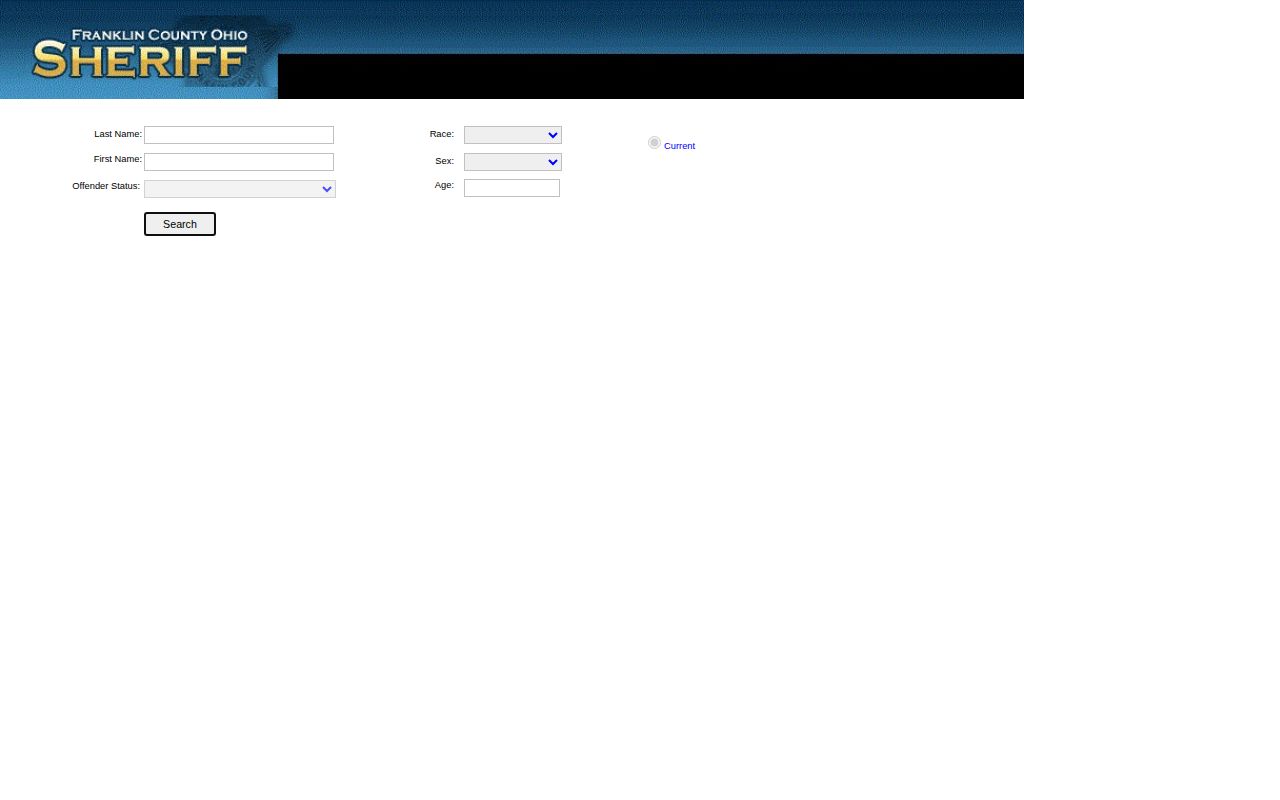
Its current-only scope is why a three-day historical result must come from calls, dockets, and release records rather than the screen alone.
Franklin County Weekend Release Review
A three-day interval can cross a weekend or holiday, but Franklin County publishes no special weekend-release view or numeric update cadence. A court entry may appear before the jail finishes processing an exit. A live roster may change after identity checks, property steps, review of warrants or detainers, and movement entry. The exact sequence varies by the booking, so do not assign a standard release hour that the research does not support.
Use the court date as one marker, not the full answer. A judge’s order supplies legal authority. The Sheriff’s movement record supplies the physical departure. If another agency has a hold, the local case can end while custody continues. For a person whose status must be traced across the weekend, the Franklin County released-inmate lookup provides the named-person route through county, state, VINE, court, and federal systems.
Note: A wider date range reduces missed events, but it does not replace proof of each person’s actual release or transfer.
Franklin County Roster Retention Limits
The Sheriff’s interface is officially current-only, and no public former-booking visibility interval was found. A person’s disappearance is therefore a clue, not a release finding. It can follow an internal system update, transfer, or legal exit. FCSO once described the tool as up to date and real time, but no measured refresh cadence is published. That phrase does not prove instant posting or a complete historical window.
Online visibility and agency retention are separate. A booking may stop appearing on the public screen while its custody, movement, releasing, and photograph records remain under approved retention schedules. When the age or completeness of a release record matters, ask the FCSO Public Records unit for the record and, if needed, the applicable retention schedule. Do not infer destruction from a web search result.
Franklin County Release Fallback Channels
Several channels answer different parts of a three-day release question. FCSO supplies current jail status and the operational release record. The clerks supply the legal case trail. Ohio VINE can report custody events and accept notification registrations, but it is not a certified historical release list. Confirm an alert with the custodian and the case.
The ODRC Offender Search applies only after entry into Ohio state custody. Its statuses can include Incarcerated, Released, APA Supervision, and Violators at Large. A person who bonded out of a Franklin County jail and never entered state prison should not be expected there. Federal custody belongs in the BOP locator, and an ICE locator no-result does not prove release.
- Live roster
- A current-custody tool, not an archive of completed jail releases.
- Court order
- The journalized legal authority for bond, dismissal, sentence, conveyance, or another case event.
- Release movement
- The jail’s operational record of when the person left and how the event was coded.
- Receiving agency
- The custodian that takes control after a transfer, which means county custody ended but freedom did not begin.
Franklin County Release Boundaries
Karnes and FCCC II use the same Sheriff search. A change from one campus to the other is internal movement. The Franklin County Community Based Correctional Facility is a residential prison-diversion program, and leaving it can occur while court-ordered community control continues. Franklin Medical Center is a state correctional medical institution, so its discharge and supervision information belongs to ODRC.
A reliable 72-hour record should state the source and exact event. “Not returned in the current FCSO search” is accurate when that is all the screen proves. “Released to the community” requires support from the release movement or responsible custodian. “Conveyed to ODRC” describes a transfer. Preserve those distinctions when building a date-ordered list from individual records.
The result is narrower than a public feed but more sound. It ties each person to an agency, court authority, operational exit, and any next custody or supervision. That structure also prevents a scheduled date from being mistaken for an actual event.
Note: Quote the source’s exact status and date label instead of turning all county and state fields into one generic release date.